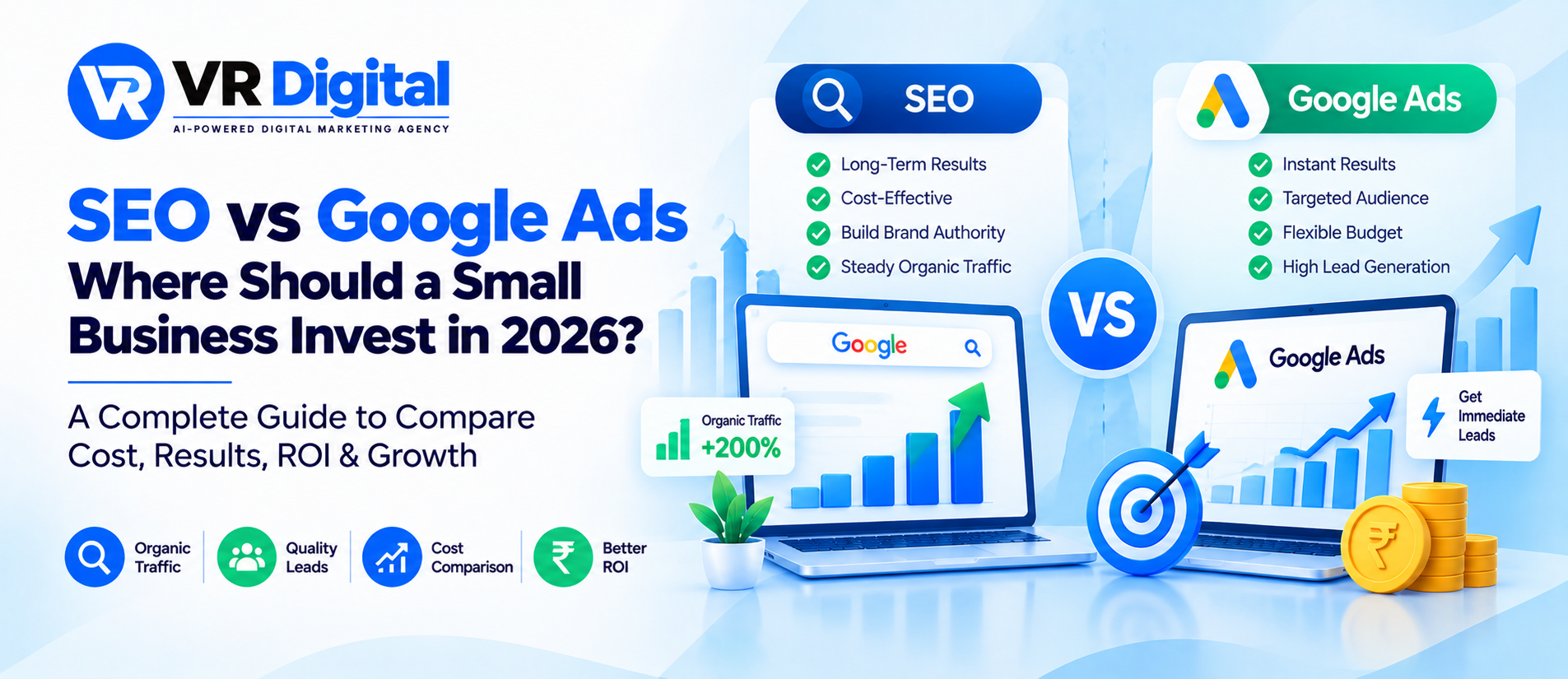
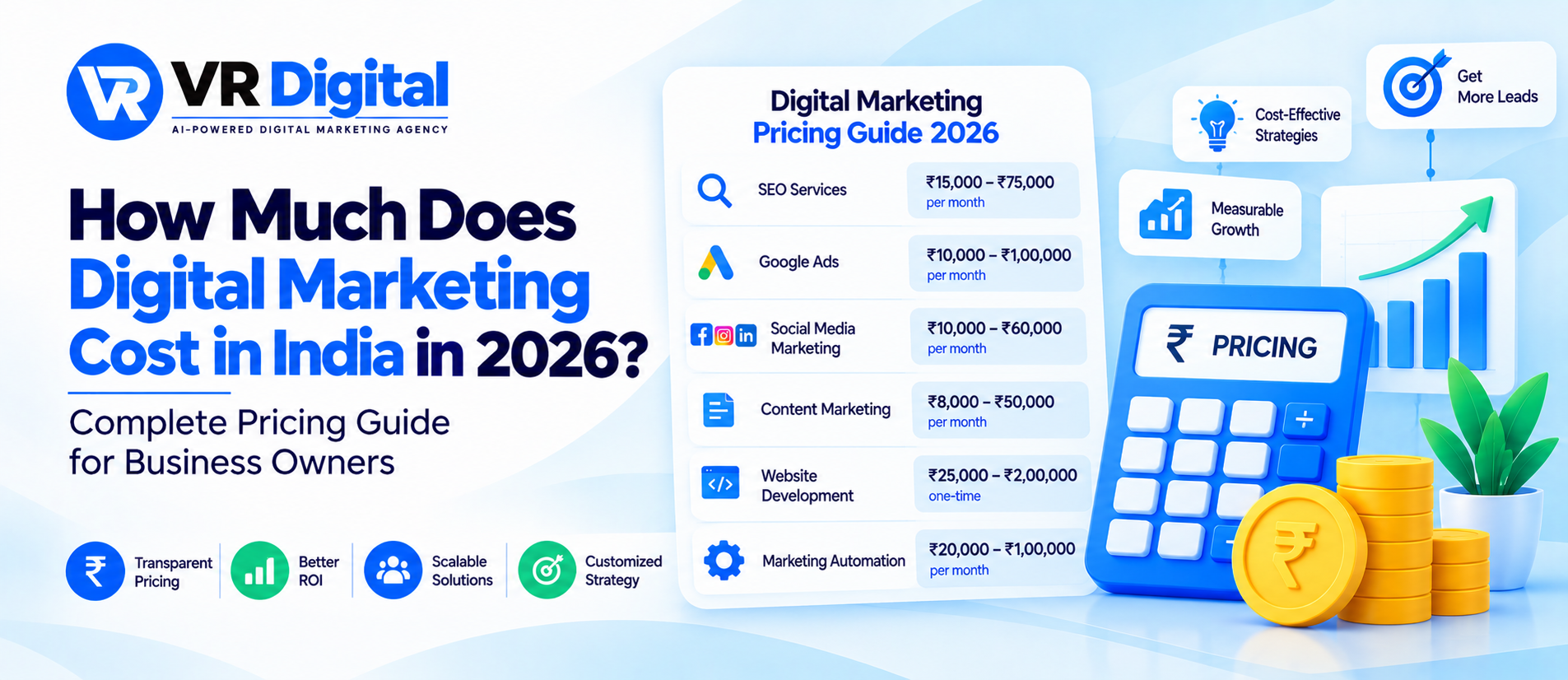
What should you actually budget? Here’s the plain truth: digital marketing cost in India shifts with your revenue targets, margins, and the urgency of results. This guide lays out testable planning bands, the pricing models you’ll encounter, and a 90‑day plan you can run without torching cash.
We’re speaking to business owners and marketing leads deciding where to put rupees in 2026. You’ll see hard numbers, the trade‑offs that come with them, and exactly what to check in GA4 and your CRM before you scale spend.
The short answer: digital marketing cost in India in 2026
Plan in bands, not by “market averages.” Begin at a level you can fund for 90 days without strain, then shift budget toward what actually proves efficient.
- For early‑stage local services or small retail, workable bands land around ₹40,000–₹1,20,000 per month across SEO, a modest paid spend, content, tools, and basic reporting.
- For growth‑stage D2C/ecommerce, plan on ₹1,50,000–₹6,00,000+ monthly, driven by media budgets, creative production, landing pages, and analytics.
- For B2B SaaS or mid‑market, expect ₹2,00,000–₹8,00,000+ monthly, with heavier content, events/webinars, paid search for intent, and CRM automation.
Treat these as starting points. Hold the plan to unit economics — cost per qualified lead (CPL), blended CAC, and payback period by channel.
Pricing models you’ll see in India
Most agencies blend a few approaches. Choose with an eye to scope, control, and your risk tolerance.
- Monthly retainer covers ongoing work such as SEO, paid media management, content, or social. It’s solid for continuity and pace — just insist on a clear sprint cadence and reporting.
- Project fees fit one‑offs like site builds, audits, analytics setups, or creative shoots. Nail down milestones, acceptance criteria, and how change requests get billed.
- Performance components tie compensation to qualified leads or revenue. They work when tracking is reliable and margins are healthy — watch how “lead quality” is defined.
- Hybrid retainers come with caps and add‑ons. Keep scopes explicit and steer clear of vague “package” labels that mask under‑resourcing.
Whatever you sign, ask for a channel plan, key dependencies, and a first 90‑day roadmap with named owners and dates.
Channel‑wise cost factors and planning bands
SEO in India: retainer ranges and what drives them
When people ask about SEO cost in India, the real driver is workload — technical fixes, content velocity, links earned through PR, and developer time. Teams buying search engine optimization services should scope audits, monthly content outlines, and dev tickets with estimated hours before agreeing on price.
We see planning bands that work at ₹30,000–₹1,50,000+ monthly, depending on site size, competition, and the volume of net‑new content. Track indexed pages added, non‑brand clicks in Search Console, rankings for bottom‑funnel terms, and leads attributed to organic in GA4.
Paid media: Google Ads and Meta budgets that hold up
Google Ads cost in India isn’t a single number; CPCs swing by city and vertical. What you can control is funnel design — keyword intent, match types, negatives, ad strength, and landing page quality. Start media at a level where you can capture 30–50 conversions a month so bidding stabilizes.
If you’re outsourcing Google Ads campaign management, keep the media budget separate from the fee. Expect management fees to scale with complexity (SKAGs vs consolidated, PMAX vs Standard Shopping, lead gen vs ecommerce). Watch cost per qualified lead or true ROAS, not just CTR.
Put 60–80% of early spend into proven intent (search and shopping). Graduate to upper‑funnel tests on YouTube or Meta once tracking is clean.
Social media marketing: production and community effort
Social media marketing cost is shaped by how often you publish, the variety of creative, and whether you run creator collaborations. Budget for shoots, editing, and community management hours — not just the “number of posts.”
If you need ongoing social media optimisation, set aside funds for both organic publishing and paid distribution. Measure saves, shares, and profile click‑throughs for organic; for paid, optimise to engaged view or add‑to‑cart, not vanity reach.
On limited budgets, double down on one or two platforms where your buyers already spend time, and ship weekly formats you can sustain.
Content, creative, and production
Expect line items for blog posts, landing page copy, product photos, short‑form video, and design templates. Costs swing with writer seniority, shoot complexity, and turnaround times. Build reusable templates so each new asset gets faster and cheaper to produce.
Tie content cost to outcomes — rank‑targeted articles that drive non‑brand clicks, videos that move product detail page views, or emails that lift repeat purchase rate.
Hidden costs teams miss (and how to plan them)
Tools and tracking. GA4 and Search Console are free, but you’ll usually carry subscriptions for keyword tools, reporting, heatmaps, and email. Budget as much for implementation hours as for licenses.
Landing pages and CRO. Many campaigns underperform because pages load slowly or ignore objections. Expect spend on website development and conversion optimisation alongside media. Watch page speed, form completion rate, scroll depth, and funnel drop‑offs by device.
Creative refresh and seasonal lifts. Performance often fades as creative fatigues. Plan monthly shoots or a refresh cadence, and ring‑fence production time before festivals and sales periods.
Data quality work. Deduplicate leads, enrich key fields, and make sure UTMs, enhanced conversions, and offline imports to ad platforms are functioning before you scale bids.
How to build a 90‑day budget that won’t waste money
Start with contribution margin math. Agree on the maximum blended CAC you can afford after ad spend, fees, and production. That becomes your north star for allocation and cut decisions.
Define one primary conversion per funnel stage. In search, make it a qualified lead or purchase. In discovery, use add‑to‑cart, an engaged view, or a lead magnet sign‑up. Wire these to GA4 and your CRM so you can judge channels fairly.
Split spend into two buckets — a stability core (70–80%) for proven intent channels and a test lane (20–30%) for new audiences, offers, or formats. Kill under‑performing tests within two sprint cycles.
If you need orchestration across paid, organic, and CRM, consider full-funnel performance marketing with clear handoffs from prospecting to remarketing to retention. Insist on a weekly trading deck showing spend, CPAs, ROAS, and qualitative learnings.
Ship faster landing pages early. Even a 10–15% lift in conversion rate can halve your effective CPL. Prioritise message‑match, trust signals above the fold, and short forms with progressive profiling.
Close the loop. Import offline conversions to Google Ads, connect lead sources to revenue in your CRM, and use incrementality tests (geo or holdout) before any major budget move.
Agency vs in‑house vs freelancer: cost trade‑offs in India
Agencies plug skills gaps fast and handle multi‑channel execution. You’ll pay a premium for coordination and senior oversight. They’re a good fit when speed matters, you need multiple disciplines, or in‑house hiring is slow.
In‑house hires build domain knowledge and reduce coordination friction over time. Total cost includes salaries, tools, training, and management time. This route works when you have steady volume and can retain talent.
Freelancers offer flexibility and lower overheads, but you’ll need to project‑manage and cover complementary skills. They’re strong for focused needs like ad ops, design, or content sprints.
- Pick agencies for cross‑channel roadmaps, creative plus media, and analytics implementation.
- Pick in‑house for brand voice, rapid iteration on owned channels, and long‑term content programs.
- Pick freelancers for specialist gaps or short projects without locking into retainers.
Talk to a VR Digital Strategist →
Conclusion
There isn’t a single right digital marketing cost in India. What you can control is evidence — track real conversions, protect your margins, and scale only what proves efficient. If you want a pragmatic plan and senior hands on setup, VR Digital can help map budgets to outcomes.
Start with a 90‑day allocation you can sustain, wire up clean tracking, and let the numbers call the next spend move.