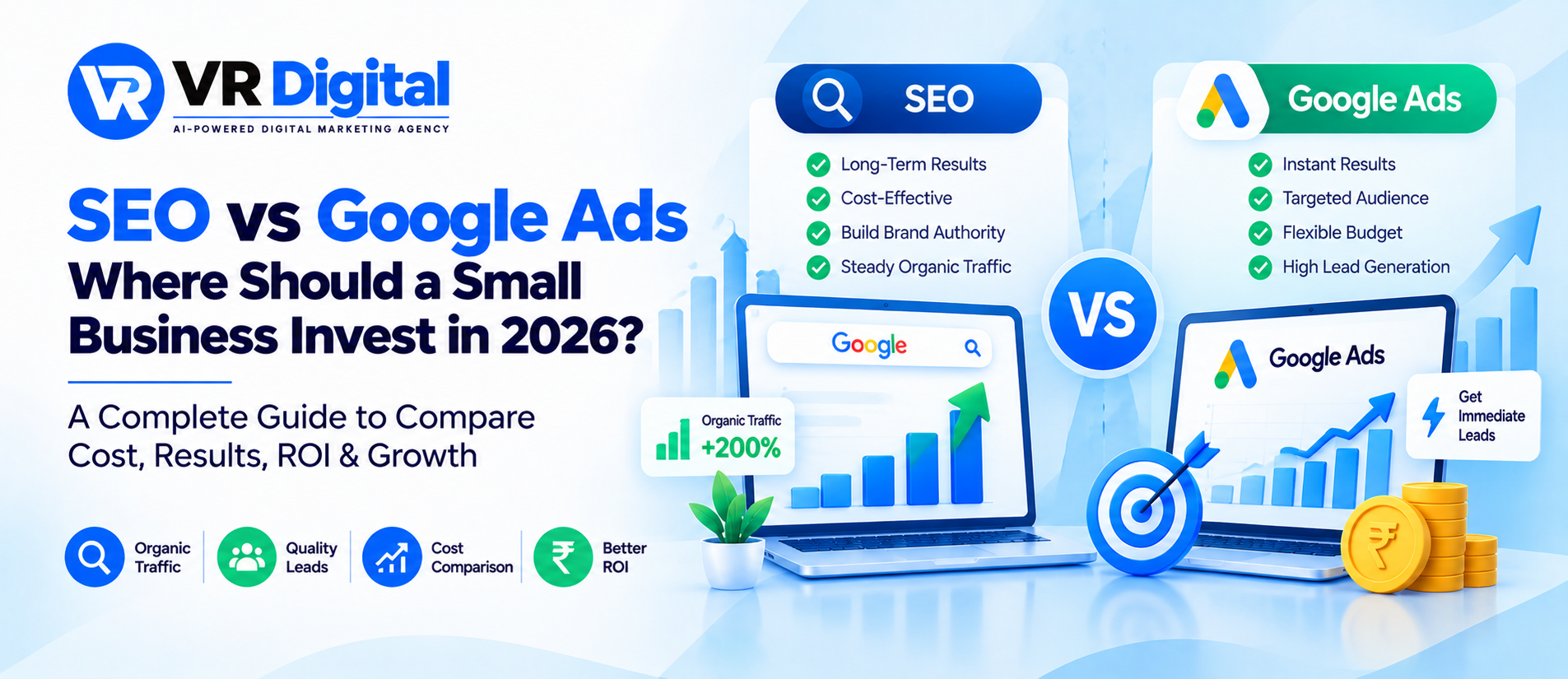
Choosing between SEO vs Google Ads in 2026 isn’t a theoretical debate for a founder in India—it’s a budget call. Your choice should follow cash flow, urgency, website quality, and how confident you are in turning clicks into sales.
You’ll get the straight answer up front, then the detail to justify the spend. We’ll cover costs, timelines, India-specific realities, what to audit, and the key metrics that separate guesswork from growth.
The quick answer: how to choose in 2026
Need leads or sales this week and can afford paid tests? Start with Google Ads. If your category has steady search demand and you can invest for months to earn compounding returns, build SEO in parallel or first. Local businesses with intent-heavy queries usually benefit from both.
Early budgets pull more weight when your site captures and converts demand. If you lack technical foundations or content depth, bringing in search engine optimization services while kicking off a lean paid pilot is a practical split.
Base the decision on evidence, not opinions. Validate search demand in Search Console, check conversion rates in GA4, and model an acceptable cost per lead or order from your margins before you switch anything on.
Cost, speed and ROI: side-by-side for small businesses
SEO in 2026: compounding value, slower to start
SEO compounds because content, links, and brand mentions keep working after you publish. The trade-off is time to impact. Expect to measure progress by indexation, top-20 coverage, and growth in non-brand clicks before you expect stable revenue. Strong internal linking and helpful content that answer real tasks matter more than ever.
Google Ads in 2026: immediate testing, pay-per-learning
With PPC, you buy data fast—queries, conversion rates, message fit. You also pay for every impression and click. Tight account hygiene, negatives, granular assets, and landing page quality decide whether you pay for waste or for learnings. If you want a managed start, consider Google Ads campaign management to enforce structure and a steady testing cadence.
Using both: control plus compounding
Running both gives you control over coverage while SEO ramps. You can defend brand terms, test new offers, and use paid search query data to feed content ideas. Over time, as organic rankings secure demand, reallocate paid budget to expansion keywords or remarketing.
India-specific factors that tilt the decision
India isn’t one market. CPCs and competition shift dramatically by city, language, and season. Festival peaks (Diwali, wedding season, school admissions) can swing demand and costs. If you know your peak months, pre-build landing pages and ad assets, and warm up audiences in advance.
For local and service categories, calls, WhatsApp chats, and walk-ins are primary conversions. Strong NAP consistency, the right categories, and solid reviews on your Business Profile are non-negotiable. Investing in local SEO and Google Business Profile optimisation often lowers blended lead cost while you test paid search.
Languages matter. Hindi and regional-language queries are rising, and vernacular creatives can lift conversion rates. Payment preferences (UPI, COD) and assisted journeys via WhatsApp change funnel math—track them explicitly in GA4 so your budget decisions reflect real behavior.
What to audit before you pick SEO or PPC
Don’t pick a channel until your foundations are checked. A quick audit can save months of burn.
- Confirm technical readiness—crawlability, indexation, Core Web Vitals, mobile UX, and 404/redirect hygiene.
- Make sure content and intent coverage is there, with pages that match the top queries your buyers use and clear next steps.
- Tighten landing pages with focused headlines, proof, pricing or lead magnets, fast forms, and trust elements.
- Validate tracking—GA4 conversions, Search Console, Google Ads conversion tags with enhanced conversions, UTMs, and call tracking.
- Pressure-test offer and economics—margins, acceptable CAC, LTV, and operational capacity to serve demand.
If gaps are obvious—slow pages, weak messaging, clunky forms—prioritise website development and conversion optimisation before heavy traffic. Paid clicks will only amplify friction.
Once the basics are in place, decide on sequencing. Categories with long research cycles (B2B services, education, healthcare) usually benefit from educational content and lead magnets while PPC tests bottom-of-funnel queries. Fast-moving consumer services may go paid-first with a lean SEO build running in the background.
Budgets, timelines and KPIs to monitor
SEO: plan in quarters, measure leading indicators
In Quarter 1, fix technical issues, publish cornerstone content, earn the first relevant links, and move priority queries into the top 20. By Quarter 2, expand topical clusters, improve internal links, and start winning page-one placements. Quarter 3+ is about defending rankings, adding FAQs and schema, and tracking assisted conversions.
Google Ads: fund learning, then scale with control
In Week 1–2, structure campaigns by intent, write focused assets, set exact conversions, and launch with conservative bids. During Weeks 3–6, mine search terms, add negatives, test landing pages, and tune bidding to CPA/ROAS. Ongoing, protect brand, expand proven themes, and revisit budgets monthly.
Report channel health clearly. For SEO, track non-brand clicks, new page-one rankings, branded search growth, and conversion rate by page template. For PPC, track cost per lead or sale, impression share, Quality Score drivers, and new-customer share. If you’re managing multiple stages, a full-funnel performance marketing plan helps align channel roles and budgets.
Common mistakes to avoid in 2026
- Choosing a channel before you have clean tracking. Bad data makes both SEO and PPC look worse than they are.
- Underfunding PPC so no ad group reaches significance. You’ll switch it off before learning anything useful.
- Publishing generic content that AI answers can replace. Build topical depth, original examples, and entity signals so you’re cited or chosen.
- Ignoring local hurts—weak categories, no photos, and slow responses kill intent-heavy leads near you.
- Thin landing pages. Without social proof, pricing clarity, FAQs, and fast forms, you’ll pay for clicks twice.
- Last‑click thinking. Attribute calls, WhatsApp chats, and assisted journeys so you don’t starve upper‑funnel work that actually moves revenue.
Two bonus checks most teams skip—refresh winning content quarterly to defend rankings, and review negative keywords and placements every week. If you’ve run a Google Ads account before, you already know how quickly waste creeps in.
Talk to a VR Digital Strategist →
Conclusion
The right answer to SEO vs Google Ads in 2026 depends on urgency, competition, and your site’s ability to convert. Most Indian small businesses win by funding controlled PPC tests while building defensible SEO, then shifting spend as the data proves where profit lives. VR Digital can help you plan and execute without guesswork.
Start with your numbers, validate demand, and choose a sequence you can sustain for at least a quarter. Then measure relentlessly and adjust—steady beats sporadic every single time.