You’re weighing whether marketing automation is worth it for a small business in 2026—and what deserves the first pass. The short version: automate lead capture, qualification, handoff to sales, and follow-ups. Nail that, and you’ll answer faster and close more without adding headcount.
Everything else is there to support that core. Tools, AI models, and dashboards matter only when they move those four moments. On a tight budget, finish one flow end to end before you buy more software.
What AI marketing automation means in 2026
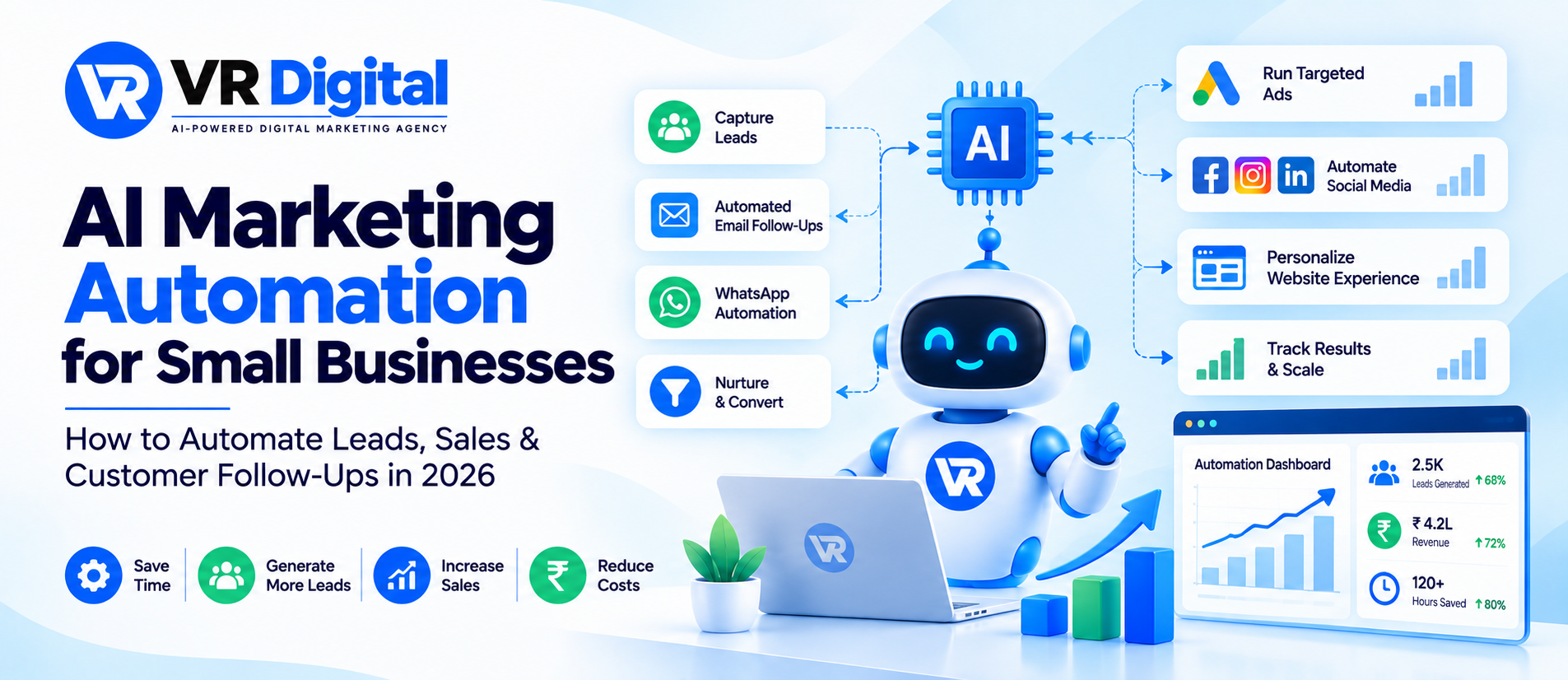
For small businesses, AI marketing automation looks like a connected system: ads and SEO push traffic to forms or chat, the data flows into a CRM, and AI helps with triage, replies, and reminders. In India, WhatsApp is a primary follow-up channel alongside email, SMS, and calls.
This isn’t about replacing people. It cuts the manual copy‑paste, speeds up first response, and keeps cadences consistent. If you only get a handful of leads a month or don’t have tracking, start with the basics before heavy automation.
Guardrails matter. Document consent, respect TRAI DLT requirements for SMS, use approved WhatsApp templates, and store opt-ins/opt-outs in your CRM. Poor compliance burns sender reputation and can block delivery.
The core flow: capture, qualify, convert, follow up
Direct answer you can implement this week
- Capture leads with fast landing pages or native lead forms, and send all submissions to your CRM with the source, campaign, and a timestamp.
- Qualify by scoring for fit and intent. Where it’s B2B, auto‑enrich company fields and trigger different cadences based on the score.
- To convert, assign owners, create tasks, and book calls with a calendar link. When buying is immediate, offer UPI or payment links.
- Follow up using WhatsApp, SMS, and email in a short window, and stop the sequence on opt-out or conversion to avoid fatigue.
Speed wins. Aim for an instant acknowledgement and a human call during working hours. If no one answers, move to WhatsApp or SMS with a crisp note and a single CTA—pick a timeslot or share requirements.
Plenty of teams centralise orchestration in AI automation and workflow creation so routing, templates, and alerts live in one place. That approach cuts down on brittle, one-off zaps that fail quietly.
Picking marketing automation software and tools
Lightweight stacks vs. all-in-one platforms
A lean stack pairs a CRM such as Zoho, Pipedrive, or Freshsales with a WhatsApp API provider like Interakt, WATI, or Gupshup, adds email via SendGrid or Amazon SES, and runs workflows in n8n or Make. All-in-ones such as HubSpot or LeadSquared bundle most of that with native lead scoring and sequences.
Choose on channel fit, budget, in-house skills, and reporting needs. If WhatsApp is core, prioritise providers that offer template management, session messaging, and smooth agent handoff. Running B2B with longer cycles? Make sure native deal pipelines, meeting links, and document tracking hold up.
Avoid overbuying. Start with what supports one funnel. Confirm how pricing scales—seats, contacts, messages—and test deliverability for your vertical. In India, template approvals and per-message costs shape cadence design, so model that before you commit.
Step-by-step setup for small businesses in India
India-first channels: WhatsApp and UPI
Wire channels in this order—tracking, capture, CRM, messaging, then analytics. Configure GA4 with clean UTMs and one primary conversion. Build one offer-specific landing page or lead form. Connect it to your CRM with webhooks or native apps. Add WhatsApp flows and a booking link. When it makes sense, enable payment links or UPI for instant purchases.
If landing pages are slow or leaky, invest in website development and conversion optimisation before scaling traffic. Faster pages, fewer fields, and clearer offers lift conversion and lower cost per lead across every channel.
Keep ownership clear. Who calls first? How fast? What happens after a missed call? Put these rules inside the CRM, not in a slide deck, so they actually fire.
Sales automation and customer follow-ups that convert
Blend automation with human touches. Send an acknowledgement, then hand off to a rep with context, a short script, and a calendar link. Use different cadences for new leads versus re-engagement, auto-close stale tasks, and recycle unresponsive leads after a set window.
AI assistants help with FAQs, quotes, and appointment handling, but give them guardrails and an easy escape hatch to a human. Train models on approved answers, product data, and policies. Log every AI message on the contact timeline so reps see what was promised.
Creative matters more than it gets credit for. Teams that systemise graphic design with AI turn out on-brand ad variants, WhatsApp templates, and micro-personalised images at speed, which lifts response without bloating headcount.
Measurement and optimisation: the operating cadence
Review weekly: new leads, speed-to-first-response, connection rate, reply rate by channel, meetings booked, and pipeline created. Monthly, look at win rate, CAC by source, payback, and churn for returning customers. Set up offline conversion imports to Google Ads and Meta so bidding reflects qualified outcomes, not just raw leads.
Run contained tests. Try alternative first messages, subject lines, or sending times. Cap total touches per contact and enforce quiet hours. In GA4, build funnels for view → start → submit, and segment by traffic type to spot where forms or bots drop users.
Paid and organic only work as hard as the follow-up engine behind them. Teams running full-funnel performance marketing align creative, targeting, landing experience, and sales cadences so no step is optimised in isolation.
Common mistakes, costs, and when not to automate
Data hygiene is the first thing to break at scale. Standardise fields, deduplicate records, and block user-created sources that wreck reporting. Respect opt-outs. Over-messaging can get your WhatsApp number flagged, and skipping DLT registration risks SMS blocks.
Expect three cost buckets: platform seats, usage (messages, emails, minutes), and orchestration. Time is a cost too—someone must own templates, compliance, and QA. If your team is small, consider self-hosted n8n to reduce app fees, but budget for maintenance and monitoring.
Automation won’t fix weak offers or a site that doesn’t convert. If lead volume is low, improve discovery and demand creation first with search engine optimization services and better content. Once traffic and intent rise, automation multiplies the impact instead of masking gaps.
Talk to a VR Digital Strategist →
Conclusion
For small teams, the win comes from focused marketing automation: capture cleanly, qualify fast, follow up quickly, and measure what turns into revenue. Start with one offer and one funnel, prove it, then layer channels and complexity.
If you want a partner who can map that flow, stitch tools, and keep it compliant, VR Digital can help. Next step: audit your current path from click to conversation, find the slowest handoff, and automate just that piece this quarter.