A property enquiry becomes useful when your team understands what the buyer is looking for. Someone asking about a two-bedroom home in a specific Mumbai neighbourhood may have a different budget, timeline and purpose from someone exploring investment options across the city. Sending both the same brochure can leave important questions unanswered.
Real estate lead generation in Mumbai needs a clear path from the advert to a relevant conversation. More forms do not automatically mean more suitable buyers. The property information, enquiry questions and sales response all influence whether an interested person takes the next step.
This guide explains how to qualify enquiries, improve property landing pages and measure progress towards attended site visits. Use it to identify what needs fixing before increasing advertising spend.
Agree what a useful enquiry looks like
Start with the inventory your team actually represents. List the property types, configurations, locations and current price information you can substantiate. Decide which requirements you can help with and which should be directed elsewhere.
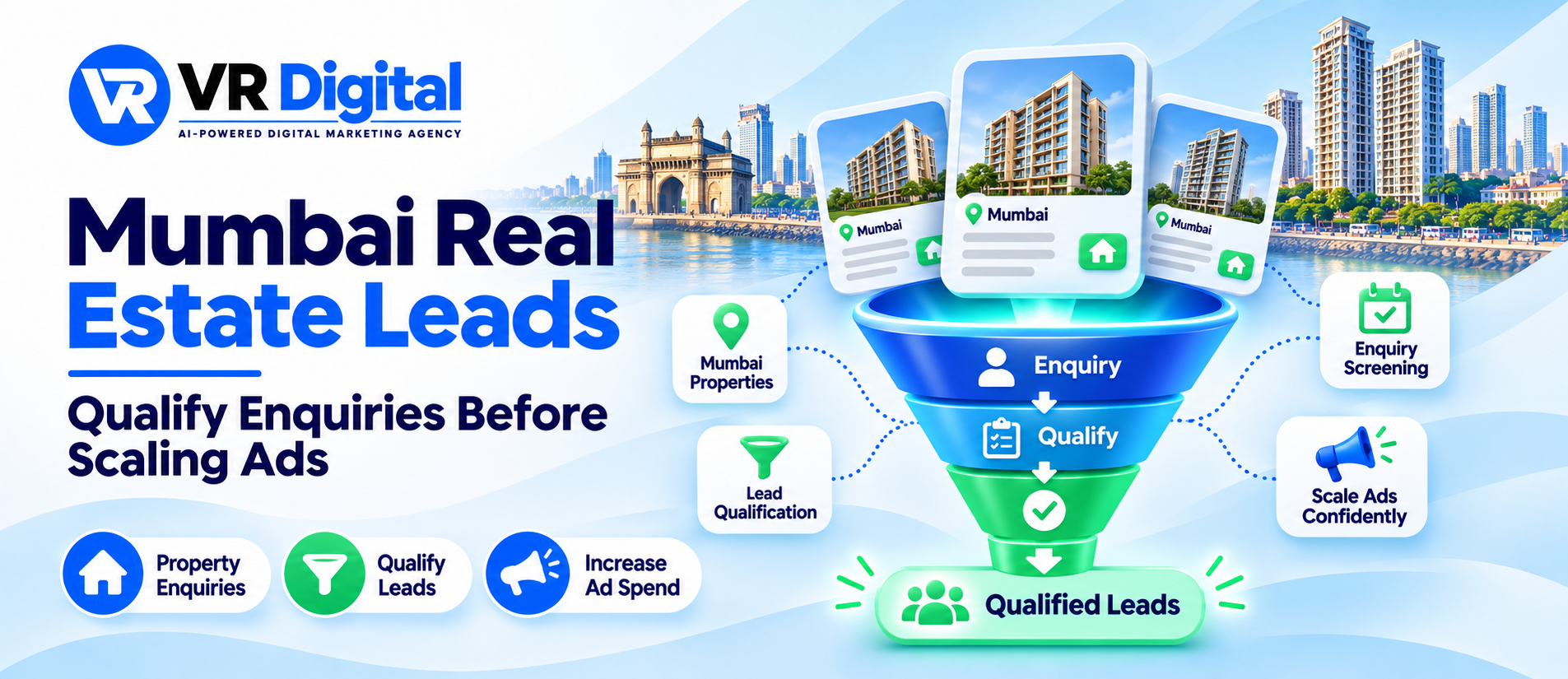
Then agree a practical qualification checklist with sales: preferred locality, property type, indicative budget, purpose and purchase timeline. These questions should help a conversation, not become an interrogation. An early-stage buyer may still be relevant even if they are not ready to arrange a visit today.
For help connecting campaign goals with sales outcomes, explore VR Digital’s performance marketing services for Mumbai. Share how your team currently defines a qualified enquiry so reporting starts with a common definition.
Match the campaign to the buyer’s requirement
Separate clearly different offers instead of advertising every property under one broad message. A campaign for ready-to-view apartments needs different information from one promoting a commercial property. Within residential campaigns, locality and configuration may be more useful distinctions than a generic luxury label.
Use actual search terms and enquiry records to understand buyer language. Phrases about property type, neighbourhood, possession status and site visits can guide the page structure. Treat keyword ideas as hypotheses until account data supports them; do not invent search volumes or assume every popular term fits your inventory.
If you are considering search campaigns, discuss your offer alongside VR Digital’s Google Ads services for Mumbai. Targeting should reflect the properties available and the buyers you can assist.
Make the property page answer the first questions
After clicking an advert, a buyer should quickly recognise the property or collection they expected. Show the relevant locality, configuration, current availability and a clear explanation of pricing. State what a quoted amount includes and which details require confirmation rather than using an unexplained starting price.
Use authorised photographs and label illustrative images clearly. Keep floor plans, property descriptions and amenity details consistent with verified material. Have the responsible property team check project information, required disclosures and promotional claims before publication.
Explain the next step: request details, speak to an adviser or arrange a visit. A short form can ask for contact information and one or two useful preferences. For page improvements, see VR Digital’s website development services for Mumbai.
Check whether your page matches the advert. Request a free website audit to discuss unclear property information and enquiry routes.
Ask fewer, better questions during follow-up
Start by confirming which property or advert prompted the enquiry. Ask whether the advertised locality and configuration suit the buyer, then clarify budget range and timing. Avoid requesting sensitive financial documents simply to send basic property information.
For example, if someone wants a different configuration, check whether suitable inventory exists before sending a visit invitation. If their timeline is longer, agree whether and how they want updates. This is more useful than treating every contact as an immediate booking opportunity.
Keep a short, consistent summary in your CRM: requirement confirmed, suitable options available, next action and follow-up date. Restrict access to personal information and honour contact preferences. A clean record helps the next adviser continue the conversation without making the buyer repeat everything.
Separate form submissions from sales progress
Track distinct stages: new enquiry, contacted, qualified, visit scheduled, visit attended and subsequent sales outcome. Define each stage so two advisers do not report the same situation differently. A visit invitation is not an attended visit, and a contact-button click is not a confirmed conversation.
Remove duplicates from lead totals and record why enquiries do not progress. Wrong contact details, unsuitable inventory, unclear pricing and missed follow-up point to different fixes. Combining them all under “poor leads” hides the cause.
Google distinguishes qualified and converted lead goals. Where suitable, offline outcomes can inform measurement through a supported setup and appropriate data permissions. Our performance marketing guide explains why outcome tracking matters beyond the initial form.
Use costs that reflect the buying journey
Calculate cost per qualified lead by dividing the relevant campaign spend by the number of qualified enquiries attributed under your agreed method. Also review cost per attended visit where records are reliable. Keep the time period, definition and attribution approach consistent.
These measures answer different questions. A campaign can generate inexpensive enquiries but costly attended visits if requirements rarely match. Another may bring fewer contacts who progress further. Neither should be judged from click-through rate or form cost alone.
Allow for the gap between first enquiry and later outcomes. Recent enquiries may still be in follow-up, so comparing them with older completed journeys can give a misleading picture.
Fix the main weakness before expanding
Review campaign results with sales each week. If enquiries match the offer but calls go unanswered, improve the response process. If buyers repeatedly reject the price after calling, check what the advert and page led them to expect. If the wrong requirements dominate, review the message and targeting.
Change one clear weakness at a time and record what changed. Increase spend when your evidence, inventory and follow-up capacity support it. Property enquiry qualification is an ongoing process, not a form setting you can finish once.
Want clearer visibility into your property enquiries? Contact VR Digital to discuss campaign structure, landing pages and lead reporting.