You’re trying to scale lead generation without burning quarters on guesswork. The short version: pick one intent channel you can own, pair it with a conversion‑ready website, and automate qualification so sales only sees real prospects. After that, add experiments in layers. That’s how you generate leads online that actually close.
The details make the difference. Offers, tracking, and sales follow‑up separate winners from noise. India adds its own twists—WhatsApp is default communication, price shoppers abound, and regional languages influence response rates. This guide lays out 15 proven lead generation strategies for 2026, what to track, and when each fits. Where paid acquisition is part of the mix, full-funnel performance marketing should be measured against lead quality, revenue and attribution.
Make your site convert before you add more traffic
Triage the place where leads land first. Prioritise speed (Core Web Vitals). Make the value prop obvious above the fold, keep one primary CTA, and trim forms to the essentials. Set up GA4 properly, enable enhanced measurement, connect conversions, and push offline events from the CRM so ad platforms learn from qualified outcomes.
If your bounce rate is high or form completion is weak, pause and invest in website development and conversion optimisation before you scale media. You’ll protect budget and make every channel more efficient.
Give people fast paths that match their comfort level—short forms, WhatsApp click‑to‑chat, “request a callback,” and a simple pricing or ROI calculator. For website lead generation, test headline clarity, where you place proof (logos, testimonials), and loading speed on low‑end Android devices.
Organic discovery: SEO, content and AI answers
Search still delivers compounding traffic, though the formats have shifted. Build topic clusters around the real questions buyers ask. Publish product‑led content that shows outcomes, and answer People Also Ask queries concisely. For B2B lead generation, map content to role, pain, and stage—and only gate what sales truly needs.
Prepare for AI answers by structuring content well. Use clear headings, concise definitions, and schema where appropriate (FAQPage, Product, Organization). Keep entities explicit and explain comparisons plainly so answer engines can cite your pages confidently.
If you don’t have deep in‑house capacity, align with search engine optimization services that audit technical issues, plan clusters, and enforce internal linking so authority flows to money pages.
In Search Console, monitor query intent shifts, cannibalisation, and page experience. Ship fixes—compress images, stabilise CLS, and prune dead pages. A simple monthly content cadence that alternates bottom‑funnel pages with educational guides beats sporadic bursts.
Local and trust signals that turn searches into calls
In service areas and retail, Google Business Profile is often the first touchpoint. Fill out categories, services, products, and attributes fully. Keep adding fresh photos, collect reviews continuously, and respond fast. Update hours around festivals and public holidays. Use Posts for offers and events, and enable messaging if you can reply promptly.
When you cover a city or region, prioritise local SEO and Google Business Profile optimisation to capture high‑intent “near me” searches and route calls to the right team.
Don’t ignore Indian aggregators like IndiaMART, Justdial or Sulekha in some verticals. They can fill short‑term gaps, but watch lead quality and duplicate buyers. Use WhatsApp Business for quick replies, catalogues, and FAQs. Add regional‑language creatives for Tier‑2/3 cities to lift response.
Paid acquisition that pays for itself
Begin with search campaigns that target bottom‑funnel queries, then layer Performance Max or Discovery once tracking is clean. Use value‑based bidding only when you can pass conversion values from the CRM; otherwise, start with Maximise Conversions with tight negatives and exact match anchors. Prefer landing pages over lead form extensions unless speed is critical.
When you’re ready to scale across channels, plan full‑funnel performance marketing so awareness, consideration and conversion work together instead of in silos.
On Meta, test lead ads versus site traffic by CPQL, contact rate and show‑up rate. Creative is the lever—rotate hooks, pain points, and proof. LinkedIn can work for enterprise targeting, but expect higher CPLs. Use n8n or similar to dedupe, enrich with Clearbit‑style data, and trigger instant follow‑ups.
Social proof, content and creative that earns attention
People trust people. Publish founder POV posts, quick demo videos, customer walkthroughs, and mini‑case stories. Host short webinars or live product teardowns, then turn Q&A into clips. Use communities and DMs to move warm conversations into trials or site demos without hard selling.
Your team can speed production with graphic design with AI to create on‑brand variations for Instagram, LinkedIn and YouTube thumbnails without slowing down the calendar.
Be intentional in distribution. Use LinkedIn for insights and DM conversations, Instagram for short proofs and polls, and YouTube for in‑depth demos. Add captions, clear CTAs, and UTM on every link. Repurpose posts into email sequences and WhatsApp broadcasts where permitted.
Automate, score and route leads so sales closes more
Define what “qualified” means jointly with sales. Score by role, company size, location, and behaviour (pages viewed, webinar attended). Route by region or product line, set SLAs for first response, and give BDRs short scripts for WhatsApp, email and phone. Centralise all outcomes in the CRM so nothing gets lost.
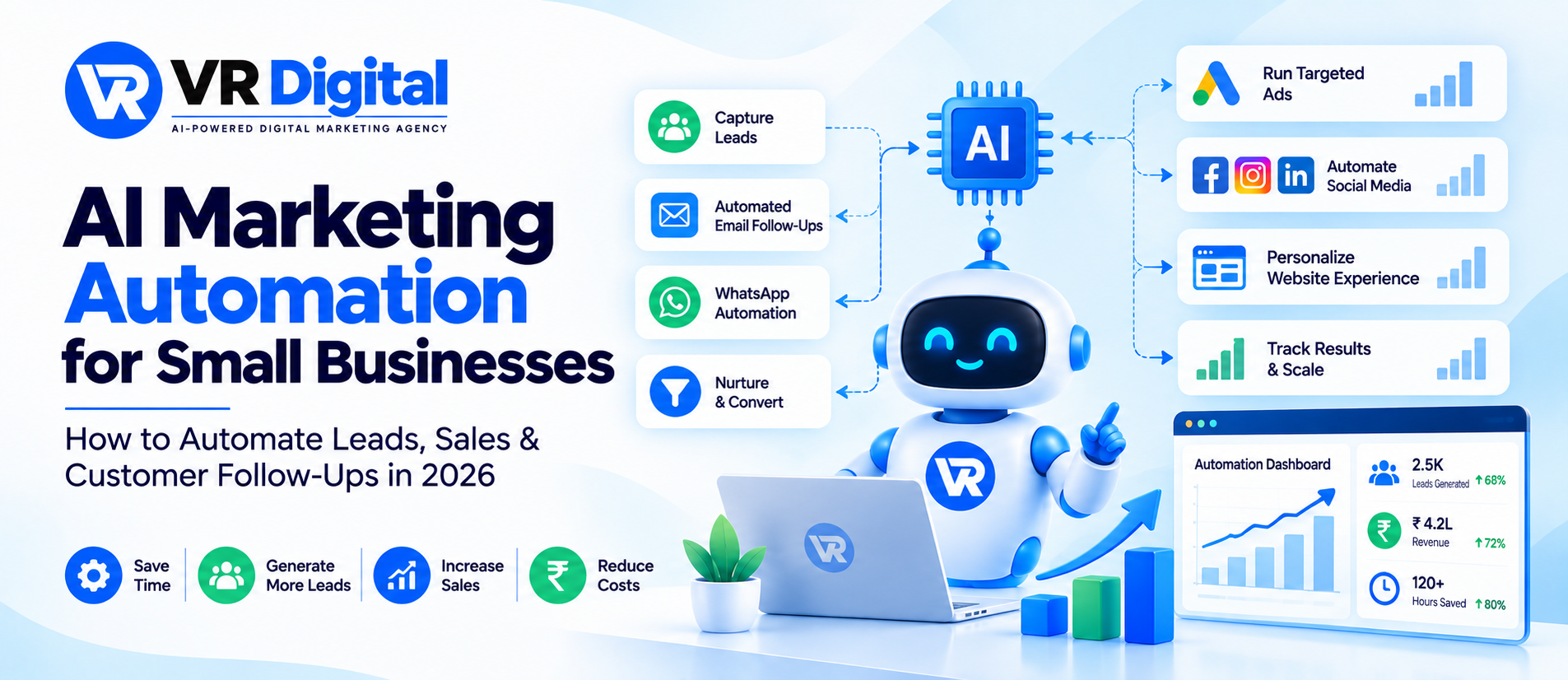
Wire your stack with GA4 + server‑side tagging where feasible, form webhooks, CRM, and ad platforms with offline conversion import. With n8n, create flows to block duplicates, enrich data, push Slack alerts, and nudge pending prospects. Add call tracking, auto‑record notes, and train a WhatsApp bot to answer basic FAQs and book slots.
Track weekly the contact rate, speed‑to‑lead, qualified rate, cost per qualified lead, pipeline created, and win rate. Build a simple Looker Studio or BigQuery dashboard, then prune channels that can’t meet your CPQL target even after creative and offer work.
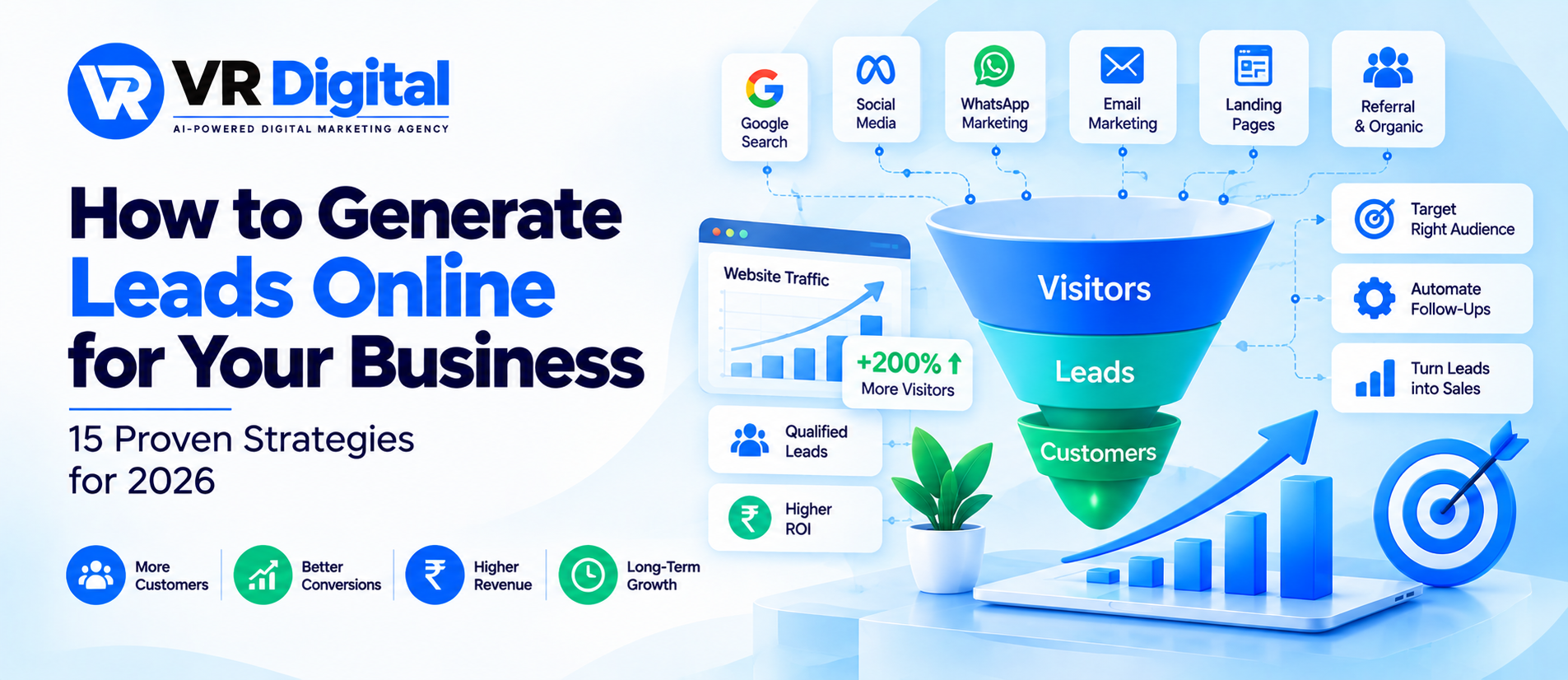
The 15 proven lead generation strategies for 2026
- Speed‑optimised site with clear, single‑goal landing pages.
- Minimal forms, WhatsApp chat, callback, and calculators.
- Full GA4 setup with offline conversions from the CRM.
- Topic clusters and product‑led content that answers real queries.
- Structured data and clean internal linking for AI/search extraction.
- GBP completeness, reviews, photos and messaging where viable.
- Local listings and selective use of Indian aggregators.
- Bottom‑funnel Google Ads with tight queries and negatives.
- Meta and LinkedIn for creative testing and role‑based reach.
- Performance Max only after clean conversion signals exist.
- Founder‑led content, webinars and short social proofs.
- Creative at scale using AI and systematic variation testing.
- Lead scoring, routing and rapid follow‑up via WhatsApp and phone.
- n8n automations for dedupe, enrichment and instant alerts.
- Dashboards that report CPQL, pipeline and win rate, not vanity.
Talk to a VR Digital Strategist →
Conclusion
There’s no single channel that solves lead generation. The teams that win stack a conversion‑ready site, intent‑aligned traffic, and tight follow‑up—then keep improving based on CPQL and pipeline, not clicks. If you want help operationalising this for India, VR Digital can map and run the playbook with your team.
Start with one or two bets you can execute well. Measure honestly, move budget fast, and keep the message clear. That’s how you generate leads online that close in 2026.