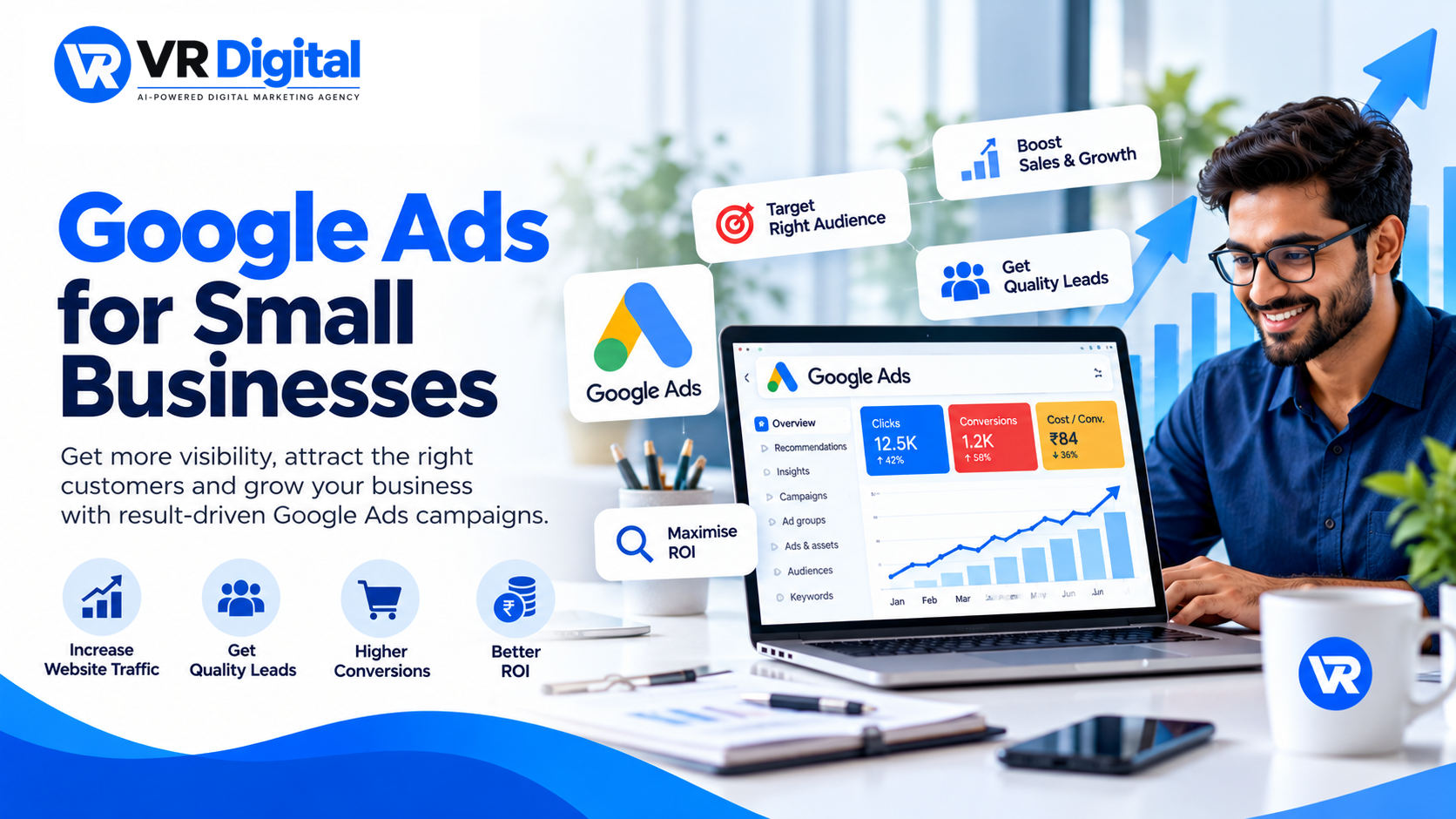
Most founders start with one blunt question: how do we run Google Ads for small business without wasting budget and still grow leads? The right answer mixes tight targeting, disciplined measurement, and a landing experience built to convert in India’s real buying conditions.
If you need a decision today, start with high-intent Google search ads, protect your budget with phrase match and negatives, track only real conversions, and iterate weekly. Then layer automation only where it proves ROI. This guide shows the exact steps.
What actually works for more leads in 2026
The short version is this—keep control where intent is clear, and use automation where signals are strong. Don’t pay for impressions you can’t measure.
- Prioritise Search campaigns on bottom-funnel terms before you scale Performance Max.
- Use phrase or exact match for core services, and add negatives from day one.
- Send traffic to fast, specific landing pages with one primary CTA.
- Track qualified leads only, and import offline conversion quality if possible.
- Start with Maximise conversions, then shift to target CPA once stable.
- Review search terms, assets, and locations every 3–4 days in ramp-up.
If you’d rather have a specialist set guardrails, consider expert Google Ads campaign management to establish foundations and avoid early waste.
Before you touch bids, get agreement on what counts as a lead for sales—not just a form fill. That one alignment can save months of confusion.
Set up the account right from day one
Conversion tracking essentials
Connect site events to GA4 and import the primary conversion into Google Ads. For lead gen, prioritise form submits, qualified call durations, and booked meetings. Use enhanced conversions for leads so hashed first-party data improves attribution, especially on mobile.
Keep “soft” actions like time on page out of the primary goal. Create secondary goals for micro-engagements if you only want to observe them. Test a unique call tracking number and confirm it fires on call connections, not just button clicks.
Account and campaign structure
Skip the dozens of tiny ad groups. Group closely related themes so each ad can speak clearly to its keywords. Most small accounts perform with a handful of Search campaigns—one for non-brand core services, one for brand, and optional dynamic search ads once negatives are mature.
Each ad group should map to a single, focused landing page. Keep two or three responsive search ads per group, with 8–12 strong headlines, clear benefits, and one action. If you’ve run accounts before, you already know messy structure leaks bids.
Targeting that lowers CPA in India
Lead with intent, then layer geography. India-wide targeting rarely makes sense early unless fulfilment is nationwide and fast. Start where your service capacity and reputation are strongest.
Location and schedule choices
Choose “Presence” over “Presence or interest” to avoid out-of-market clicks. Split metros if costs or lead quality vary by city. Set ad schedules around when your team actually answers calls and WhatsApp—then review call logs and adjust. Watch festival seasons; business availability changes around Diwali and key regional holidays.
- Exclude geographies you can’t serve profitably.
- Bid down low-performing cities rather than pausing entire campaigns.
- Match language targeting to the city; don’t mix multiple languages in one campaign.
Audience layering that helps bidding
Add remarketing lists and custom segments (competitor domains, category keywords) as observation to see how they convert. When data shows an audience outperforms, apply a targeted bid strategy or split to a dedicated campaign.
Local service businesses often pair Search with their business profile. If footfall or calls matter, strengthen your presence with local SEO and Google Business Profile optimisation so ads and organic together capture more intent in the same geography.
Keywords, match types and negatives
Good keyword hygiene is still the best PPC advertising lever. Lazy keyword lists attract junk leads and drain budgets.
- Use phrase match for most queries at launch, then add exact for proven converters.
- Keep a tight seed list, and expand only after search term reviews validate quality.
- Separate brand from non-brand so you can protect brand CPCs and report clearly.
- Build a negative list for job seekers, free, DIY, careers, PDF, YouTube, and irrelevant cities.
- Review search terms twice weekly in ramp-up; promote winners and negate time-wasters.
When the account matures, dynamic search ads can uncover gaps—but only if your site’s content is organised and accurate. Poor sites feed poor DSA queries.
Ads and assets that earn clicks
Responsive search ads win when the message is specific. Pin your most critical headlines sparingly if rotation harms clarity. Use benefit-led copy matched to the keyword and the landing page promise.
- Attach sitelinks, callouts, and structured snippets to claim more SERP real estate.
- Use call assets during staffed hours, and location assets if you serve walk-ins.
- Test image assets for added visual credibility on some placements.
- Consider lead form assets when you lack dev resources, then compare lead quality to your site forms.
Your landing page does most of the conversion work. Fast load, above-the-fold proof, clear next step, and forms that screen for intent. If this piece feels weak, invest in website development and conversion optimisation before pushing more budget into ads.
Multi-language markets benefit from cloned pages with native copy and local testimonials. Don’t just translate; localise examples and pricing context.
Budgets, bidding and cost control
Early on, let the system learn, but set boundaries. Maximise conversions is a practical start when volume is low. Move to target CPA after you’ve reached steady weekly conversions and confirmed the tracked action matches sales-qualified leads.
Keep budgets at campaign level for clarity. Avoid shared budgets until you truly want a pool to compete internally. Monitor “Top vs. Absolute top” impression share—you often don’t need position one to hit your CPA. Watch the “Search terms” and “Assets” reports weekly to cut spend fast on low-quality variants.
Review Google search ads settings you might overlook. Search partners can work for some verticals yet hurt others—test in an Experiment. Check location options, language settings, and device bid adjustments. Rising CPC? Tighten queries, improve ads and landing quality rather than only raising bids. That’s where sustainable Google Ads cost control lives.
Measurement that sales trusts
Lead volume without quality is theatre. Align marketing and sales on what constitutes a qualified lead, and reflect that in your tracking plan.
- Use enhanced conversions for leads, and verify tagging with the Google tag assistant.
- Implement offline conversion imports, or at least CRM stages (SQL, won, lost), to teach bidding what matters.
- Track phone calls with unique numbers, and import call outcomes if possible.
- Use UTMs consistently so GA4 and your CRM agree on source and campaign.
If organic makes up a big share of pipeline, coordinate PPC with your search engine optimization services so paid protects bottom-funnel terms while organic content grows discovery. Cross-channel planning reduces blended CAC over quarters, not days.
Keep a simple feedback loop: a weekly review of search terms, lost IS (budget), asset group performance, and a sales report of accepted versus rejected leads. Use Experiments for bids or new landing pages so you don’t reset learnings across the whole account.
As you scale remarketing and mid-funnel capture, stitch journeys together with full-funnel performance marketing so Search, PMax, video, and email stop operating in silos.
When you can forecast next month’s qualified leads within a reasonable band, you’re ready to raise budgets or add new geographies with confidence.
Talk to a VR Digital Strategist →
Conclusion
Winning with Google Ads for small business in 2026 comes from disciplined setup, clean intent targeting, strong pages, and measurement that rewards real prospects. Most of this is process, not hacks.
If you need a partner to pressure-test the plan and run the first sprints, VR Digital can help you get to reliable signals, then scale. Start with one market, one offer, and one clear way to qualify leads, and build from there.