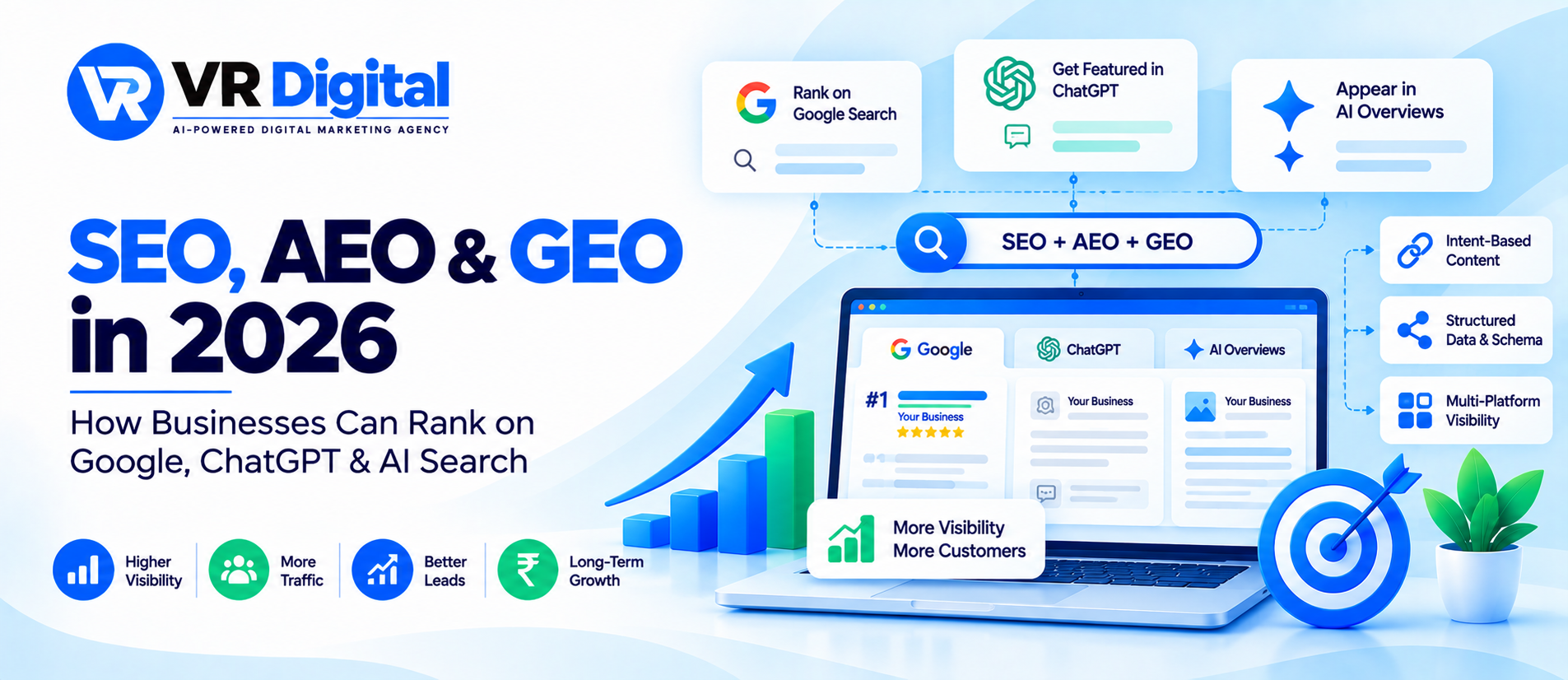
In 2026, AI SEO isn’t just about blue links. It’s about turning your site into the source Google, ChatGPT, Gemini and other assistants can parse, trust and quote. If you sell in India, that translates to clear entities, local context and outcomes you can measure.
Here’s the short version. Make your brand a verifiable entity, structure pages so an assistant can pull answers in seconds, back claims with sources, and ship fast, accessible pages. Then track revenue impact, not vanity traffic. The rest of this guide walks through it, step by step.
What “AI SEO” Really Means in 2026
AI SEO is about earning a spot in AI-generated answers by being the clearest, most trustworthy source on a topic. Traditional rankings still count, but assistants prefer concise, well-structured pages they can summarise without guessing.
Generative Engine Optimization (often called GEO) and Answer Engine Optimization (AEO SEO) both sit under that umbrella. You’ll also see terms like AI search optimization or ChatGPT SEO. They all share one goal—make your content machine-parsable and verifiable so it’s safe to surface in an assistant’s response.
For India-first firms, being explicit about service areas, languages, INR pricing and GST treatment cuts ambiguity. AI handles intent better when location, inventory, delivery times and support channels are spelled out.
Where You Need to Rank: Google, SGE, ChatGPT, Gemini, Perplexity
You’re optimising for three surfaces—classic Google organic results, AI-assisted search answers (such as AI Overviews where available), and standalone assistants like ChatGPT, Gemini or Perplexity when they cite the web. Each applies different selection pressures, yet all of them reward clarity and trust.
On Google, keep building durable topical authority and maintain clean technicals. For AI answers in search, short on-page summaries, crisp definitions and schema make fact extraction easy. For assistants, accessible pages with transparent sources and up-to-date facts tend to win citations on specific, niche queries.
If you want a single framework, treat this as AEO, GEO and AI search optimisation work: answer the question, prove it, structure it and make it fast. That mindset keeps teams moving in sync instead of chasing every new interface.
Nuance in India matters. Searches often include Hindi or Hinglish terms, city names, or marketplace comparisons. Mirror those variants on-page with natural phrasing and examples, not keyword stuffing.
Build Content That AI Can Trust and Summarise
The most direct route is simple—publish entity-centric, Q&A-rich pages with explicit definitions, comparisons and decisions. Assistants want atomic facts and short syntheses they can quote.
Entity-first architecture
- Map your core entities—company, products or services, locations, industries, partners and the key problems you solve.
- Build hubs for commercial intents (pricing, features, integrations, delivery) and add spokes for questions, alternatives and use cases.
- On every hub, start with a two- to three-sentence summary and a scannable list of key points an assistant could lift.
Source-of-truth signals
- Keep your About, Team, Policies, FAQs, Pricing, Returns and Contact pages current. Add expert bios to show real authorship and accountability.
- Use citations for claims, link to original standards or regulations where relevant, and timestamp updates so assistants can judge freshness.
- Localise by showing INR, GST notes, service areas and languages supported. Offer WhatsApp or phone support details only if you actually staff them.
Schema that mirrors reality
- Prioritise Organization, WebSite, Product or Service, Article, FAQPage and BreadcrumbList. Mark author, reviewer and dateModified wherever it applies.
- Use JSON-LD, validate in Rich Results Test, and keep structured data consistent with on-page copy and your knowledge panel details.
If bandwidth is tight, bring in search engine optimization services that know entity modelling, source-of-truth pages and schema governance. It’s typically cheaper than trying to retrofit later across hundreds of URLs.
Technical Signals for AI Search Engines
The fastest way to improve AI visibility is to clear blockers. Make the site crawlable, fast, secure, and easy to parse. After that, add structured hints so machines don’t have to infer.
Crawlability and structure
- Audit robots.txt, canonical tags, XML sitemaps and pagination. Fix loops and duplicate clusters before you publish more content.
- Flat, logical navigation beats clever tricks. Make hubs one click from home and ensure every spoke links back to its hub.
- Serve clean HTML with semantic headings, and don’t bury key facts in images or scripts.
Performance and media
- Hit Core Web Vitals on mobile. Compress images, lazy-load below-the-fold assets, and prefetch likely next pages.
- Provide descriptive alt text and captions for images and charts that sum up the takeaway in one sentence.
- Secure everything behind HTTPS, fix mixed content, and standardise redirects to a single canonical host.
If you rely on footfall or regional services, invest in local SEO and Google Business Profile optimisation. Consistent NAP, categories, products, photos and Q&A make it easier for assistants to grasp where you operate and what you offer.
For multilingual or multi-region builds, plan hreflang early. In India, even a simple bilingual setup (English plus Hindi or a key regional language) can reduce ambiguity and improve relevance for assistant answers.
Measure the Right Outcomes Across Search and AI Assistants
Success isn’t a single rank. Track qualified leads, branded search growth, assistant-driven referrals and conversion rates on pages you’ve reworked for entity clarity and schema.
In GA4, group key landing pages, confirm events for leads and purchases, and use Explore to compare cohorts before and after you change content. In Search Console, review coverage, sitemaps and query clusters that are trending up. Keep a lightweight log of assistant citations for priority terms so you can verify changes move the needle.
Where organic can’t cover reach quickly, layer in Google Ads campaign management to capture near-term demand and test messaging. Feed those learnings back into headings, intros and FAQs on organic pages to lift conversion quality.
Don’t overlook sales signals. Track call outcomes, demo show-up rates and assisted revenue from organic sessions. Those proof points justify ongoing investment beyond a single quarter.
Budget, Team and Tooling: What to Do Now
Allocate budget across four lanes—content production, technical clean-up, brand authority and measurement. Small teams should time-box work into sprints so progress is visible and blockers surface early.
A 90-day plan that works for most mid-market sites in India:
- Weeks 1–2: Audit content, entities and schema; baseline Core Web Vitals; review brand SERP and GBP; set up GA4 events and Search Console properties; prioritise a backlog.
- Weeks 3–6: Fix crawl and speed issues; implement core Organization, WebSite and Service schema; write 10–20 Q&A answers; refresh five top pages with summaries and citations.
- Weeks 7–10: Publish cluster hubs and spokes; add expert bios and media; outreach for citations from credible Indian sources and associations.
- Weeks 11–12: Re-crawl, measure, iterate; expand winning clusters; plan next quarter’s topics and technical debt payoff.
As traffic turns into pipeline, invest in website development and conversion optimisation. Faster templates, clearer forms, trust badges and persuasive social proof lift lead quality and help assistants see stable, well-structured pages.
Tooling should stay pragmatic. Use a reliable crawler, schema validators, GA4, Search Console and a task board your team actually opens. Automations help with alerts and snapshots, but don’t let tooling outrun execution.
Talk to a VR Digital Strategist →
Conclusion
AI SEO comes down to becoming the safest answer to surface. If you build entity clarity, ship structured summaries and keep your site fast and trustworthy, assistants and search engines have reasons to cite you.
For most teams, the next step is a focused audit and a 90-day plan. If you want an experienced partner, VR Digital can help you prioritise the highest-impact moves and measure outcomes without chasing hype.