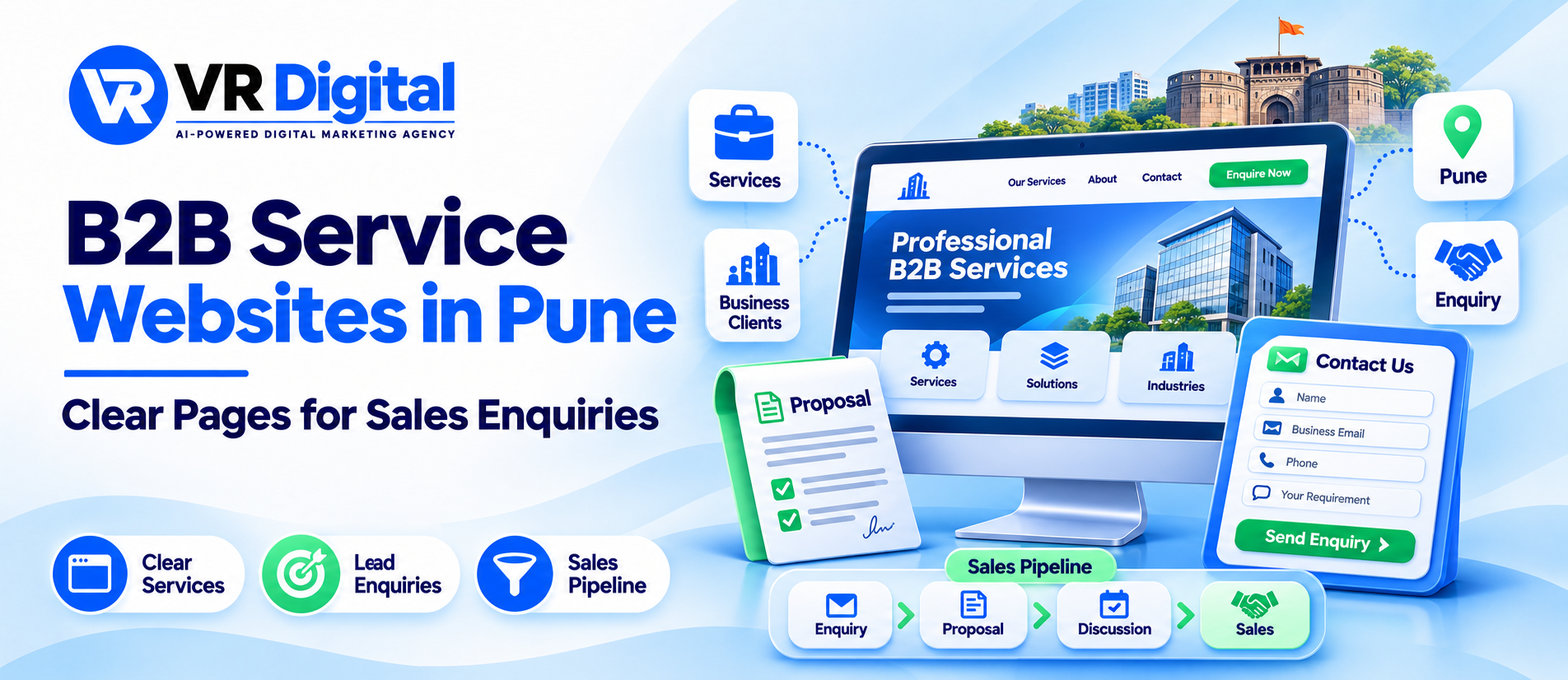
B2B website development in Pune can support three business goals: ranking for the services buyers search for, generating qualified enquiries, and helping those enquiries progress into sales conversations. Give each priority service its own page when it answers a distinct buyer need. Use a title that names the service, explain the scope and show relevant proof, then make it easy to request a quote or site assessment.
Start with one service your team wants to sell. Use Google Search Console to see which searches bring visitors to the page, and use your sales records to see which enquiries become qualified leads, proposals and won deals. Reviewing both sets of data helps you decide whether to improve search visibility, the page itself or the sales follow-up.
1. Map B2B website development in Pune to buyer searches
List the services you want to sell, then gather the phrases buyers use in enquiries, sales calls and proposal requests. For a Pune maintenance company, example phrases could include “preventive maintenance services in Pune” or “industrial equipment maintenance contract”. Use these as starting points and check whether the search results reflect the service you actually provide.
Choose one main search intent per page. A buyer looking for an annual maintenance contract needs different information from someone looking for one-time equipment installation. A B2B service website in Pune can give each service a dedicated page and link both from a clear services overview.
2. Write service pages that answer purchase questions
Use the main service phrase naturally in the page title, main heading and opening paragraph. State who the service is for, what work is included and which locations your team covers. Use subheadings for questions such as how the work starts, what the buyer receives and what information is needed to prepare a quote.
Develop service page content from actual buyer questions. On a maintenance contract page, specify the equipment you handle, what a scheduled visit covers and how you report issues. If replacement parts or emergency callouts are priced separately, explain that before the buyer requests an estimate.
If you are briefing a website development company in Pune, share a recent proposal, the questions prospects ask before committing, and any service limits. Ask the project team to include those answers in the first version of the page and have a service owner check them for accuracy.
3. Give buyers proof they can share with procurement
Place a short case example next to the claim it supports. For instance, explain how your team planned inspections across two sites, coordinated access and delivered a maintenance report. Use approved photos or client details. Publish specific results only when you can verify them and explain how they were measured.
Make important buying details easy to find on mobile. If coverage varies by location or equipment type, explain how buyers can confirm eligibility. If you list a certification, say which part of the work it applies to. This gives buyers concrete information they can share with operations or procurement colleagues.
Find out where your priority service page loses buyers. Share the page and the enquiries you want it to attract. Request a free website audit.
4. Turn service page visits into qualified leads
A lead generation website in Pune should give each buyer a clear next step. Use “Request a quote” when buyers know what they need, or “Request a site assessment” when your team needs to inspect equipment. Place the action near the service summary and repeat it after the scope and proof.
Ask for the information sales needs to respond. A maintenance enquiry might need a name, company, contact detail, site location and equipment type. Leave optional details optional. Explain what happens after submission and give a response timeframe only if the team can meet it.
5. Give sales a clear process for every enquiry
Send the service name and page address with every form submission so the salesperson knows what the buyer saw. Assign an owner and a backup. Test the form on a phone, then check that the confirmation message appears and the right team receives the full enquiry.
Agree on what counts as qualified. A suitable enquiry might involve a service your business offers, a site you cover and a buyer ready to discuss the work. Give it a next action, such as a discovery call or site visit. Record why unsuitable requests were closed so the website team can spot recurring gaps in the page copy.
6. Measure keyword rankings, qualified leads and sales together
Review Search Console impressions, clicks and average position for the page and its priority queries. Then compare website enquiries with qualified leads, proposals and won deals in your sales records. Keep the date range consistent and allow for the time it takes enquiries to become sales. These B2B website conversion practices can help you track the handoff from website visit to sales follow-up.
For illustration, if a service page receives 200 visits, 12 enquiries, six qualified leads and two won deals, its visit-to-enquiry rate is 6% and half its enquiries qualify. If the page starts attracting more visitors but the number of qualified leads stays flat, check which searches drove the extra visits and review what those buyers asked for. If qualified leads increase but proposals stall, ask sales where the requests are getting held up.
Build your next service page around the enquiries your team can turn into sales. Bring one priority service, the page buyers currently land on and the questions sales hears most often.