A busy website is useful when the people visiting have a reason to become customers. A Jaipur furniture shop needs buyers within its delivery area. A D2C skincare brand needs shoppers who understand its products. Neither benefits much from thousands of unrelated visits.
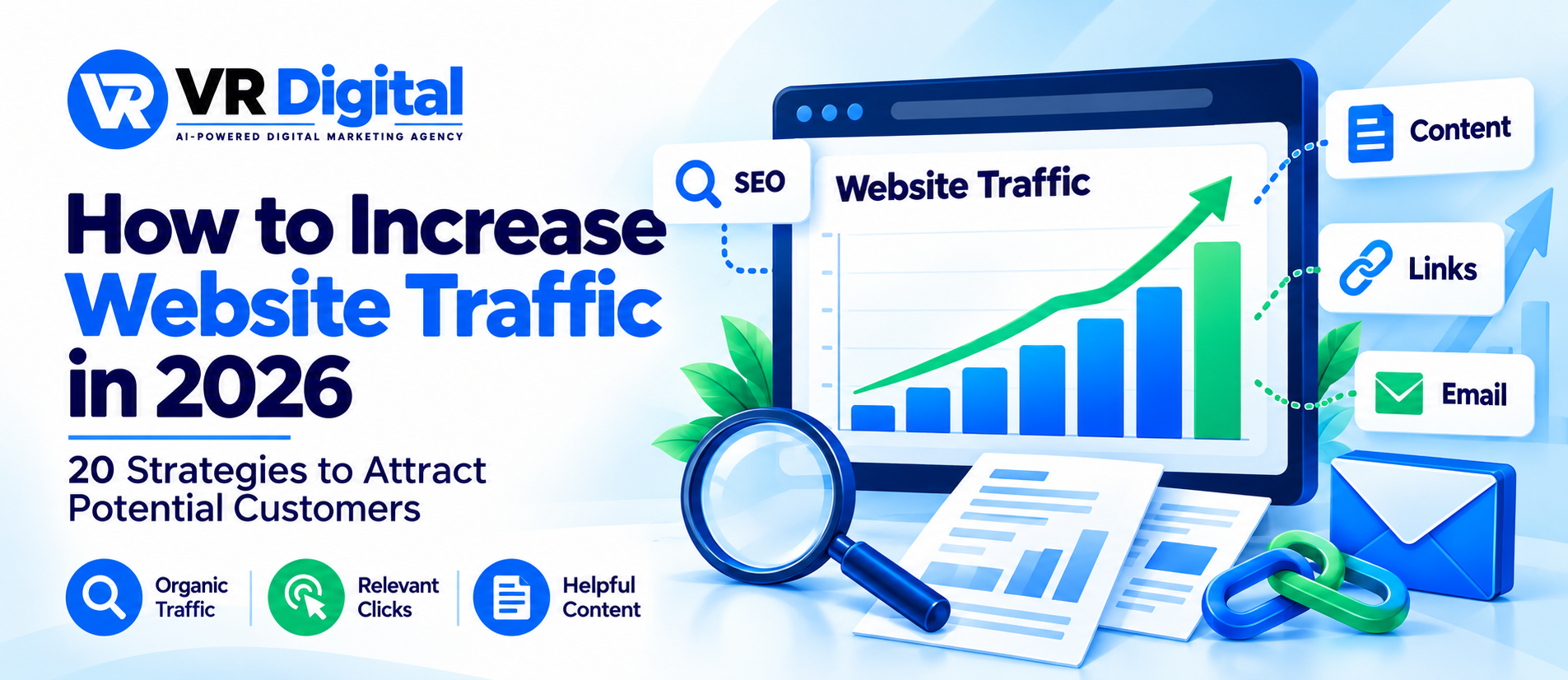
To increase website traffic in 2026, start with the questions customers ask before buying. Build pages that answer those questions, make them easy to find and give visitors a sensible next step. These twenty strategies help you decide where to begin.
Increase website traffic by focusing on relevant visits
1. Define the visitor you want
Choose a specific customer, requirement and service area. “People furnishing small apartments in Jaipur” is more useful than “everyone interested in furniture”. This definition helps you choose topics, examples and distribution channels.
2. Check whether important pages can be found
Review your priority URLs in Search Console. Look for accidental indexing blocks, missing pages and unsuitable canonical choices. A focused technical SEO review can identify obstacles before you invest in more content.
3. Match each page to a clear search need
A product page should help someone evaluate and buy. A guide should explain a problem. Avoid making several pages compete for the same purpose; give each one a clear job within the customer journey.
4. Start with questions from real conversations
Collect questions from enquiries, support messages and sales calls. “Will this desk fit a narrow room?” offers a stronger starting point than a broad topic such as office furniture trends. Answer with measurements, options and practical advice.
Improve the pages you already have
5. Refresh useful content before adding more
Find pages attracting impressions but providing incomplete answers. Update outdated details, explain confusing sections and add original examples. Our SEO for small business guide provides a broader framework for prioritising this work.
6. Write titles that describe the benefit
Tell readers what they will learn or find. “Dining Table Size Guide for Small Flats” is more helpful than “The Ultimate Furniture Solution”. Keep the page title, main heading and actual content aligned.
7. Make the search description worth reading
Summarise the page accurately in its meta description. Mention useful details such as a sizing checklist or delivery information when present. Treat it as an invitation to the right visitor, without promising a particular ranking or click rate.
8. Connect related pages with descriptive links
Link a buying guide to the relevant collection, and a service explanation to the next useful resource. Use descriptive anchors. Planned search engine optimisation should make these routes understandable to readers as well as search engines.
9. Improve the mobile reading experience
Open key pages on your phone. Check readable text, intrusive popups, image loading and working buttons. Traffic is easily wasted when visitors cannot see the offer or complete the action that brought them there.
10. Add evidence from your own work
Use genuine product photographs, clear demonstrations and examples you can substantiate. Explain how a process works rather than repeating industry slogans. Get permission before publishing customer material, and avoid presenting illustrative numbers as actual results.
Reach people beyond a search results page
11. Keep local business information accurate
For eligible local businesses, check contact details, hours, services and website links on Google Business Profile. Useful local SEO and Google Business Profile optimisation connects discovery with accurate information about where and how you operate.
12. Turn one useful answer into several formats
A detailed fitting guide can become a short demonstration, a carousel and an email tip. Each format should answer something on its own. Link to the full page when the reader genuinely needs more detail.
13. Share in communities where the question arises
Join relevant professional groups and discussions. Answer the question before sharing a link, and follow the community rules. Repeated promotional links can damage trust even when the destination contains useful information.
14. Give social posts a specific destination
Send a product demonstration to its product page, rather than your homepage. Consistent social media marketing works better when the post and destination continue the same conversation. Use campaign labels to distinguish distribution sources in your analytics.
15. Bring existing readers back through email
Invite people to subscribe with a clear explanation of what they will receive. Share relevant new resources and product updates with consenting subscribers. Segment by interest where practical, and make unsubscribing straightforward.
16. Work with relevant partners
A furniture seller and an interior designer could create a practical room-planning resource. Agree who contributes, who publishes and how each audience benefits. Seek useful exposure and credible collaboration rather than buying links to manipulate rankings.
For a small team, assign an owner to each channel and keep the workload realistic. A useful partnership needs follow-up, just as a newsletter needs editing. Stop activities that repeatedly consume time without reaching the intended audience, and put that effort into the sources you can improve.
Choose traffic sources you can evaluate
17. Test paid distribution with a spending limit
Paid campaigns can introduce a useful offer while organic visibility develops. Set the budget, audience and desired action first. Track enquiries or purchases alongside visits, and pause campaigns that bring unsuitable visitors or expose a broken landing page.
18. Make content useful in AI search too
State answers clearly, explain your reasoning and keep important information available as text. Google’s AI search guidance says existing SEO fundamentals still apply; special AI markup is not required. Inclusion and traffic remain uncertain.
19. Compare sources using business outcomes
Review visits alongside suitable enquiries, purchases and follow-up outcomes. Agree consistent definitions before comparing channels. A smaller source bringing relevant prospects may deserve more attention than a large source producing little meaningful engagement.
| Source | Useful check | Next decision |
|---|---|---|
| Organic search | Relevant queries and enquiries | Improve matching pages |
| Social referrals | Visits reaching the intended offer | Refine message and destination |
| Returning readers and purchases | Adjust topic and audience |
20. Keep a short, prioritised improvement list
Choose one technical issue, one page improvement and one distribution experiment. Record what changed and when. Google’s SEO Starter Guide explains that changes can take time to show an effect. Review evidence before changing direction again.