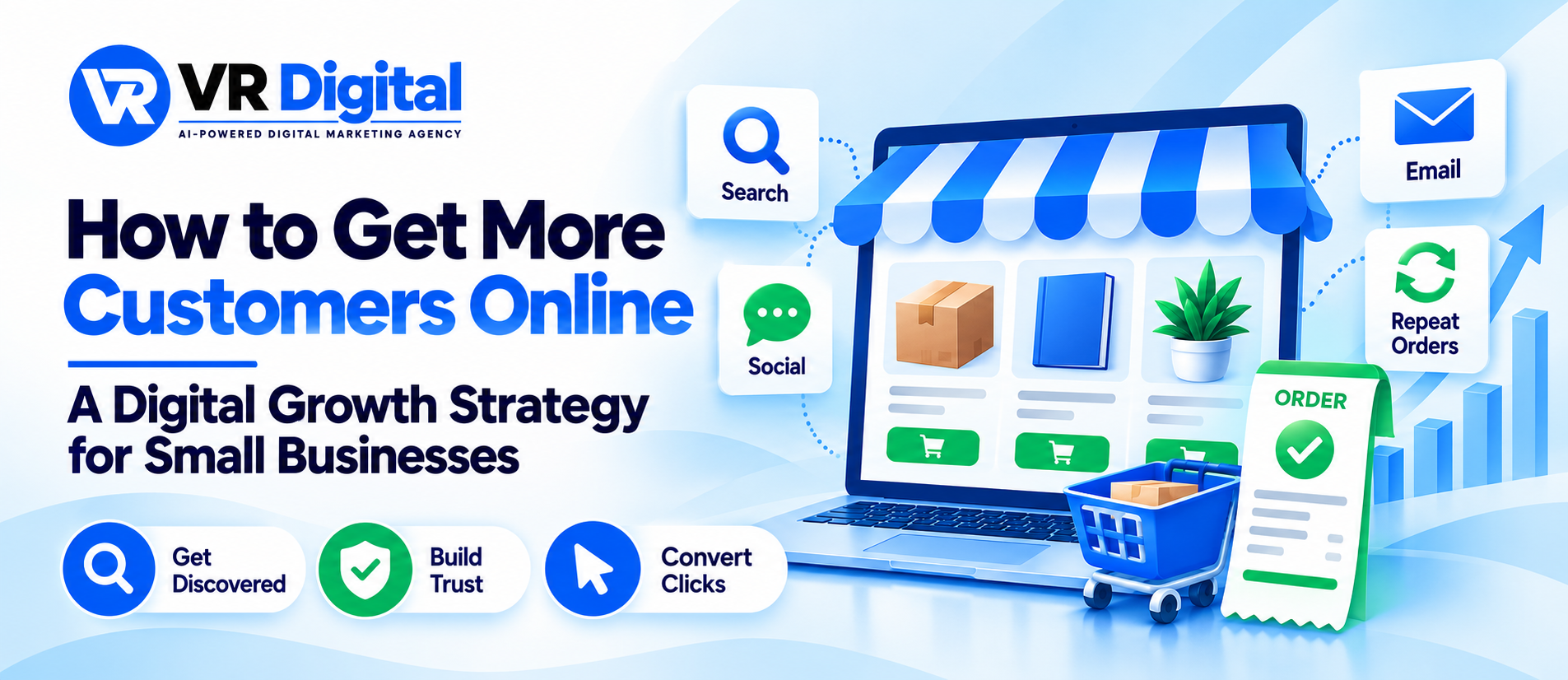
To understand how to get more customers online, follow the whole buying journey: who needs your offer, where they look, what convinces them and what happens after they enquire. More visitors can help, but growth depends on turning suitable interest into purchases you can deliver profitably.
This guide gives small business owners a practical digital marketing strategy for customer acquisition. Use it to choose a starting channel, improve your offer and connect marketing activity with sales. The examples are illustrative, rather than claims about client results.
Define the customer and the purchase first
Choose one customer group and one problem. A commercial cleaning company might target office managers needing regular cleaning within its service area. That is a clearer starting point than promoting every cleaning service to everyone.
Write down the buying trigger, common objections, decision-maker and delivery limits. Ask recent customers why they chose you and what nearly stopped them. Their answers can guide your page copy, qualification questions and follow-up.
Work out what a new customer can cost
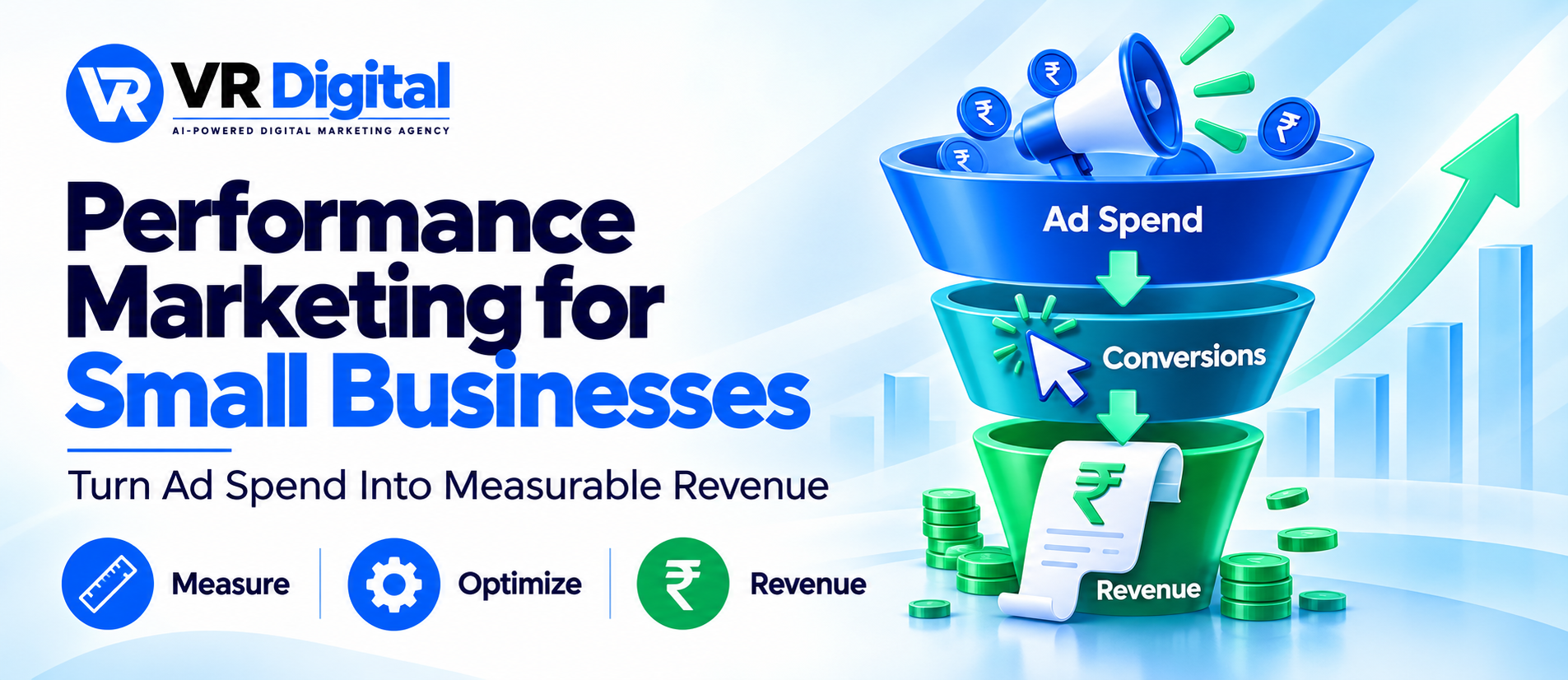
Customer acquisition cost is acquisition spending divided by new customers acquired during the relevant period. Decide which costs your calculation includes, and use the same definition when comparing channels. Advertising spend alone gives an incomplete picture when agency fees or sales effort are substantial.
For example, imagine a service earns ₹4,000 after direct delivery costs on the first purchase. Spending ₹3,500 to acquire that customer leaves only ₹500 before other overheads. These hypothetical figures show why revenue alone cannot establish whether marketing is worthwhile.
Set a spending limit using your margins, cash flow and sales cycle. If you need help connecting campaign costs with customer outcomes, discuss your requirements through VR Digital’s performance marketing services. Share your offer, target market and current measurement gaps.
Choose a channel that fits buying behaviour
Search can reach people already looking for a solution. Social content can demonstrate an unfamiliar product. Referrals can introduce buyers who trust the person recommending you. Start where your intended customers already seek information, rather than trying every platform simultaneously.
For eligible local businesses, keep Google Business Profile information accurate and complete. Google explains that local visibility depends on relevance, distance and prominence; there is no option to pay for a better local ranking. Treat profile maintenance as useful groundwork, without expecting uniform visibility everywhere.
| Buying situation | Starting approach | Evidence to collect |
|---|---|---|
| Buyer searches for an immediate service | Relevant search page and a controlled advertising test | Suitable enquiries and acquired customers |
| Buyer needs to see a product demonstrated | Helpful demonstrations with a matching product page | Product interest, purchases and returns |
| Buyer needs reassurance before committing | Clear process information and genuine customer evidence | Questions resolved and proposals accepted |
Give each important page a clear purpose
A service page should explain the service and help someone evaluate it. A supporting article should answer a related question. Avoid producing several near-identical pages for the same buying intent: they make navigation confusing and split your content effort.
Use customer language in titles, headings and explanations. If people search for maintenance contracts, explain coverage, exclusions and the assessment process. VR Digital’s search engine optimisation services cover keyword mapping, technical checks and content improvements that connect relevant searches with useful pages.
Where Search Console access is available, inspect queries and their landing pages together. Prioritise relevant searches with meaningful impressions, then investigate weak CTR in context: position, device, audience and the result’s wording can all matter. Avoid treating every low CTR as a title problem.
Make the offer easy to assess
Explain who the service suits, what is included and what happens after an enquiry. Where a fixed price is unsuitable, describe the factors affecting a quote. An office cleaning proposal might depend on floor area, frequency, access arrangements and specialist requirements.
Show genuine evidence you have permission to publish. Use product photographs, process explanations or attributable reviews where appropriate. Clearly label illustrative examples. Do not turn a sample calculation into a case study or suggest that another business’s outcome predicts the reader’s results.
Check the buying path on a phone: can someone understand the offer, find contact details and complete the form? If the page itself needs work, discuss the requirements through VR Digital’s website design and development service, including the enquiry journey and measurement you need.
Turn enquiries into useful conversations
Define a qualified lead before judging campaigns. For the cleaning example, qualification could include location, premises type and a realistic service requirement. Ask only for information needed to take the next step, and explain why sensitive details are necessary.
Give every enquiry an owner and a recorded next action. A simple tracker can hold the source, requirement, status and outcome. Agree how your team handles missed calls, incomplete requests and prospects waiting for a quote.
Once the process works manually, consider lead routing and follow-up automation for repetitive handovers. Keep human review for pricing and unusual requests, and assign someone to investigate failures. Automation needs clear ownership as well as a working connection.
Keep customers and measure completed sales
Customer acquisition continues after the first order. Set clear delivery expectations, resolve problems and ask whether the purchase met the customer’s needs. Invite repeat business when it is relevant, with appropriate permission for marketing messages and a straightforward way to stop them.
For a manageable starting point, review our marketing automation guide for small businesses. Choose one repetitive task that supports an existing customer journey, rather than adding software before the team understands the process.
Review enquiries, qualified leads, purchases and acquisition cost together. Record changes and compare periods long enough to reflect your sales cycle. Increase activity when evidence supports it; first investigate tracking, audience fit and follow-up when the numbers disagree.
Put the plan into a weekly routine
Keep a short working document with the target customer, offer, channel, budget and owner. Each week, review what prospects asked, which enquiries were unsuitable and where suitable buyers stopped. Use those observations to choose one specific improvement, such as explaining an exclusion or simplifying a quotation request.
Keep search reporting separate from sales reporting. Google’s Search Console performance guidance explains clicks, impressions and CTR; those figures do not establish how many customers you won. Its local ranking guidance explains Business Profile visibility. Connect these signals with your own enquiry and sales records before deciding what deserves more investment.